


As students, we often hear that in order to succeed, you must work hard. Part of our everyday routine is going to school, participating in sports, or working a part time job. This means we are always pressured to do more. However, what happens to our physical and mental health when all of this work takes over our personal time? Work-life balance means getting your responsibility taken care of while also taking care of yourself. Although there are those who believe working so much will achieve success, it is essential for us students to have a balance between our school time and personal time in order to be healthy and happy.
Some people argue that putting in extra effort such as studying more, working longer, and taking on responsibilites will eventually pay off int the future. They believe that more sacrafices un the present will lead to better opportunities in the future.
Jasmine Valencia, an 11th grader, works part-time at a local fast food reasturant after school and uses her earning to support herself while also saving fpr college.
“I’m young right now, so i’m going to take advantage of it and work as hard as I can so that for the rest of my life I wont have to work so hard,” she said,
On the other hand, some educators caution against overcommitting to activities in high school. Mr. Atieh, a school tutor at SBHS, emphasizes the importance of balance.
“While its admireable for students to be hard working, it’s also essential for them to make time for rest, hobbies, and social connections. Without balance, they risk burnout, which can ultimately hinder their long-term success,” he said.
Although it is important to work hard, there can be consequences to constantly putting pressure on yourself. It may lead to stress, anxiety, burnout, or lack of motivation. There are even studies that show people who overwork themselves can lose interest in school and they won’t be able to perform well in the long term.
According to Connections Academy, “less than half of students feel they have an excellent or good school/life balance (45%), and more than a fourth (29%) with fair to very poor school/life balance feel it’s having a negative impact on their ability to start career planning. The data also showed there is a disconnect between parents and students, with nearly double the number of parents believing their students have an excellent or good school/life balance (80%).”
Balancing school and work can be a significant challenge for many students at San Bernardino High School, often leading to stress and decreased motivation. Sebastian Sanchez, a 12th-grader, expressed how difficult it can be to manage both.
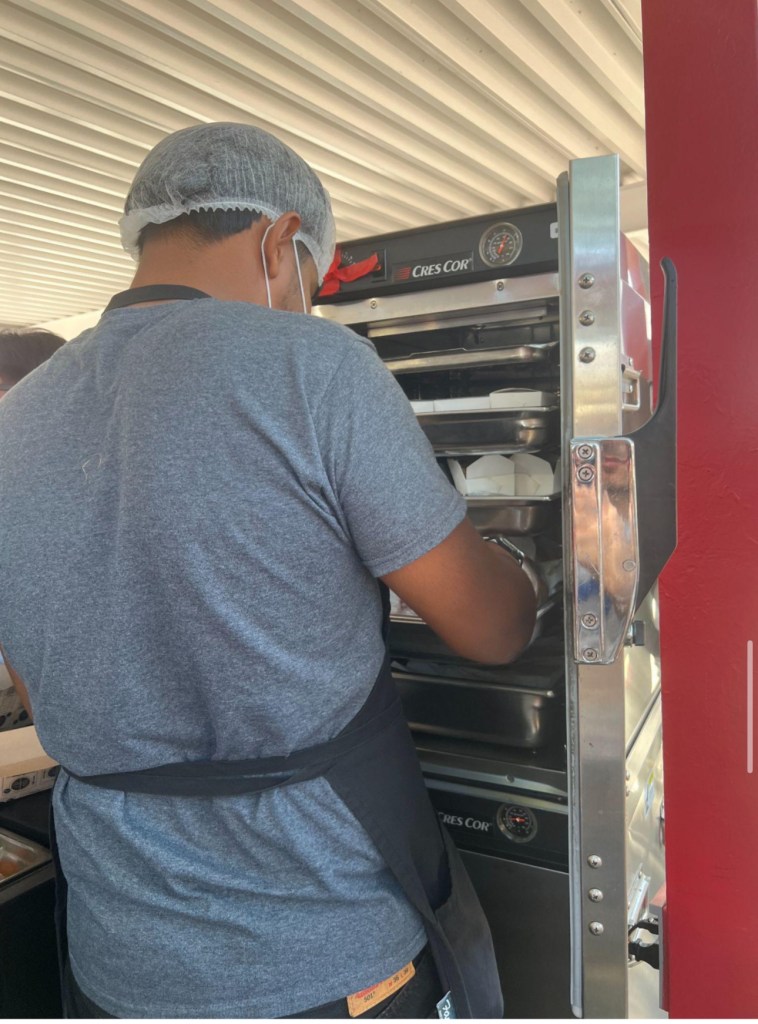
“Yes, because after a long hard day at school, I have to go to a long harsh day at work,” he said. Sanchez’s experience shows how exhausting it can be for students to juggle academic responsibilities with their work schedules, leaving little time for rest or personal interests.
The bigger problem is when students work, they just don’t care about school. Once work becomes someone’s biggest priority, they lack motivation when it comes to paying attention in class.
“If I’m being honest, I have not been putting the effort in my grades because I work a lot and I am on my phone in class. This is because I don’t get to be on my phone any other time.”David Rodriguez (11th grader) said,
High School students should understand that having a work-life balance is not a sign of laziness, it’s simply a sign that you are making a healthy decision to have a balanced life. This does not mean that you avoid your responsibilities, it means to manage it wisely in a way where you can succeed in your priorities while still having an outside life. To achieve this, students can work on their time management skills and set goals to finish their tasks on time. Students can also break their schedule down into pieces in order to finish their assignments. We can also learn to say no to unimportant tasks that are not our responsibility.


 SBHS Tyro Times